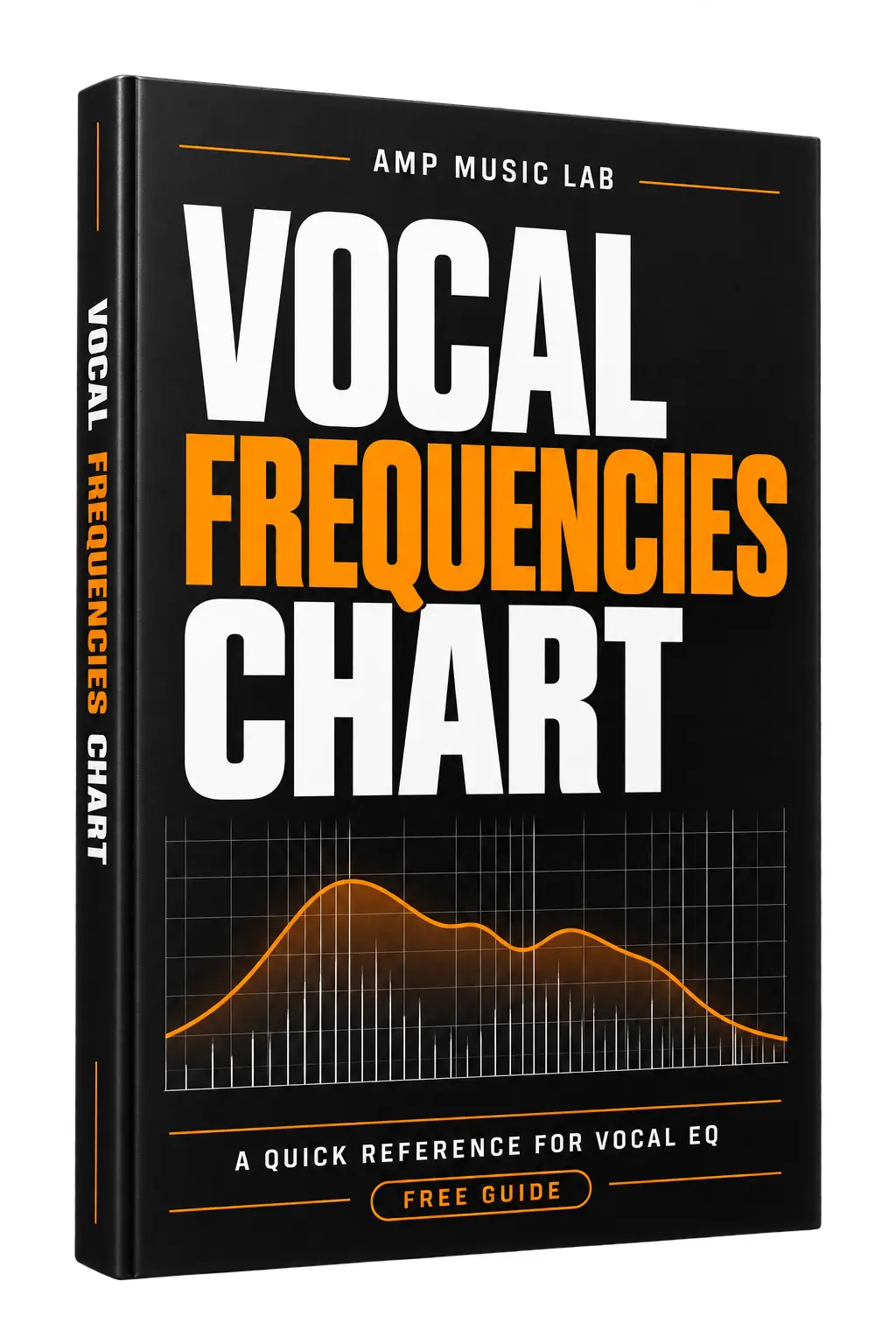
Vocal EQ can feel confusing because the words we use to describe sound—warm, muddy, nasal, harsh, airy—are subjective. But those descriptions can point you toward useful areas of the frequency spectrum.
The goal isn’t to memorize a chart and EQ every vocal the same way. It’s to connect what you hear with the change you want to make.
A voice is more than one frequency
The fundamental helps establish the perceived pitch of a voiced sound. Harmonics above it, shaped by the resonances of the vocal tract, contribute to the tone and vowel you recognize. Breath and consonants such as “s” add noise as well.
That’s why two singers performing the same note can need very different EQ decisions. Pitch is only part of the sound.
Hear first. Then reach for the EQ.
Start by listening in broad areas. Lower frequencies can contribute weight and body. Low mids can add warmth, but excess energy there may make a vocal muddy or boxy. Mids and high mids help shape intelligibility, clarity, and presence. Higher frequencies can add brightness and air, while also revealing harshness or excessive sibilance.
These areas overlap. A frequency that bothers you in one recording may be exactly what another voice needs. A boost that helps a singer cut through one arrangement might make the same voice too sharp in another.
Instead of asking, “What frequency should I boost on vocals?” ask:
“What am I hearing, and what am I trying to change?”
Make a small move, listen in the mix, and compare the result at similar loudness. If the vocal already works, you don’t need to change it just because a chart suggests an area to explore.
Download the free Vocal Frequency Guide
I put together this two-page AMP Music Lab guide to help you connect common vocal descriptions with practical listening areas. It includes:
- The AMP Vocal Frequency Map, from rumble and body to presence, sibilance, and air
- A simple explanation of fundamentals and harmonics
- Approximate adult male and female speaking fundamental ranges
- A four-step listening workflow for more deliberate EQ decisions
Keep the map open beside your DAW while recording or mixing vocals. Use it to find a starting point, then let your ears and the arrangement guide the decision.
Download the free Vocal Frequency Guide below.
AMP Music Lab
Understand what you hear. Know what to do next.